


I need to apologize for hitting your inbox twice in one weekend. The news about the formal agreement to sell the Seahawks just dropped yesterday afternoon, and I had to sit down and process it. Coming off our recent Super Bowl victory under Mike Macdonald, the timing is a lot to take in. The estate of Paul Allen is selling the team to the Khosla family for $9.612 billion.
Most people in the tech community see Vinod Khosla as a Silicon Valley legend and the co-founder of Sun Microsystems. Others in the greater community would probably have differing opinions based on the Martins Beach controversy. To me as a former Silicon Valley operator, he is the reason a boardroom for a company I used to work for ran the way it did.
My connection to the Seahawks team goes back to the 1980s. My parents had season tickets on the 2-yard line of the Kingdome when the Nordstroms owned the franchise. The seats were seven dollars each. Back in grade school, my friends and I would play, pretending to be Jim Zorn and Steve Largent.
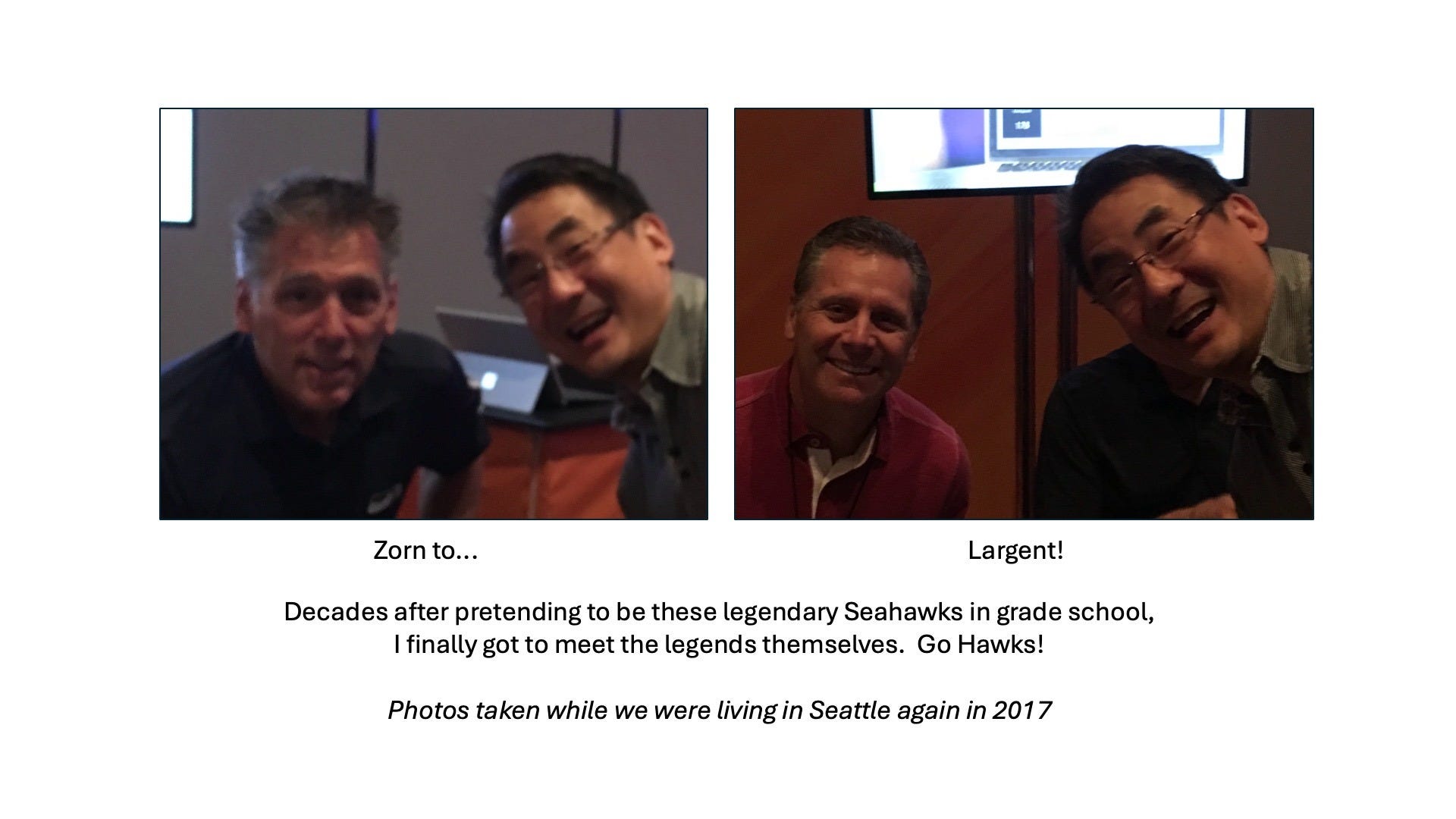
In high school, we painted our faces green and blue, with homemade signs for Kenny Easley (“Kenny Does It Easily!”)
Then Ken Behring, a California developer bought the team and threatened to move them. Later on, we watched our professional basketball team, the Seattle Supersonics get packed into moving trucks for Oklahoma City to the hometown of the new owners. Seattle fans know exactly what happens when our hometown treasure becomes the financial asset of a rich man who has no ties to the community.
Seeing Vinod Khosla take the microphone yesterday triggers those old alarms inside me. It is a massive shift from the quiet and stable stewardship of Paul and Jody Allen. I used to be a product manager at a company where Vinod’s fingerprints were on every hard call, and I personally felt how that wildcard energy impacts people downstream.
The Danger of the Interventionist Playbook
In the 1990s, I was the first product manager for a startup called Visioneer. Kleiner Perkins led our Series B, and Jim Lally held the board seat. But it was Vinod’s name that came up in every conversation the leadership team had with us about strategy. He wasn’t the one with a vote, but everyone in the building understood whose judgment actually carried the day.
Top-tier venture capitalists operate under a concept called the power law. They know a tiny handful of blockbusters will return the whole fund, and everything else will flatline. This creates an intense impatience. If a company hits a market shift, the investor’s instinct is to aggressively intervene and force a top-down pivot rather than letting management figure it out.
That heavy intervention is exactly what happened in Visioneer’s boardroom. When those of us on the ground pushed back, the friction resulted in a clean house. Our VP of Marketing was let go and I was laid off right along with the bulk of her team.
The company eventually found its footing and had a successful long-term future. My point is not about who won the argument. It is about management style. An ultra-interventionist owner can have an outsized impact on the human elements on the ground. There is danger in missing the value of culture, continuity, and a stable environment.
This is my main concern as a fan. A sports franchise is not a tech startup. A football team cannot be run through the lens of ruthless corporate optimization without ripping out its soul. If ownership begins second-guessing personnel or demanding sudden structural pivots after a brief losing streak, the fabric of a championship team breaks.
The Myth of the Reformed Investor
Some tech coverage claims Vinod changed his ways because of OpenAI. Pundits point to his hands-off backing of Sam Altman as proof of a new philosophy.
I don’t buy that narrative. The reality of the OpenAI situation was that he had zero legal leverage. OpenAI had a unique non-profit board structure that locked investors out of voting control. He had to stay out of the way because his hands were legally tied from day one. The exact moment that board exercised its power and fired Altman in late 2023, the old Vinod reappeared. He launched a furious public campaign on social media to protect his financial asset. He did not change. He just lacked the leverage to dictate terms.
The Real Guardrails for the Franchise
If he has not changed his DNA, what stops him from treating the front office like a tech startup? The answer lies in the structural cages of the NFL.
First, the league rules are very strict. The NFL mandates that a single human being hold a minimum 30 percent equity stake as the controlling owner. According to the league documents, that title belongs to his wife, Neeru Khosla. Their son, Neal Khosla, is also slated for a significant operational leadership role.
In Silicon Valley, Neeru and Neal have a completely different reputation than Vinod. Neeru focuses on collaborative philanthropy and open-source education. Neal is an operator focused on scaling healthcare access. If the Seahawks are going to maintain the community stability we had under the Allens, it will be because Neeru and Neal act as the true cultural stewards. They need to keep Vinod’s trademark impatience away from football operations.
Second, the team is legally locked down. Ken Behring could quietly pack trucks for Southern California, and Clay Bennett could exploit a weak lease to steal the Sonics. The Seahawks are bound by an explicit lease at Lumen Field that runs through 2032, and it includes three consecutive 10-year options. The NFL has spent thirty years closing the legal loopholes that allowed those mid-90s relocations. The system now is designed to protect premier markets like Seattle from wildcard owners.
What Money Can’t Buy
We are firmly in an era where professional sports teams are global financial assets. The days of seven-dollar seats are ancient history. Only mega-wealth can play in this sandbox now.
I still hold onto one ultimate comfort. Billionaires can buy the keys to the stadium. They can control the press conference microphone, optimize the balance sheets, and change the executive tiers. They still do not own the culture.
Ken Behring could not strip the blue and green makeup off our high-school faces, and he could not erase our memories of the Enforcer patrolling the secondary. Generational fandom is not tied to some balance sheet on Sand Hill Road in Menlo Park. As fans, we loved the deafeningly loud noise of the Kingdome that created the 12th man legacy. We thrived in the transition to an outdoor stadium (also really loud!) just so they could build indoor luxury boxes for the corporate crowd. (Boo!)
Even though the financial landscape of professional sports has taken away its accessibility for many families, to me, the soul of an NFL franchise should still live in the backyards where kids play catch. It should still live in the stands where Seattle fans have cheered together for decades. The Khosla family purchased the business of the Seattle Seahawks, but the team should still belong to us.
Go Hawks!
Again, apologies for crowing your inbox twice in one weekend. I’ll plan to take next weekend off from writing, as we’ll be on vacation celebrating the 70th birthday of Marsha’s cousin. Our kids will be flying in, too! I’ll be back again in two weeks!
AI disclosure: I used AI tools during the drafting and editing process to help clarify structure and language. All ideas, judgments, and final wording are my own.
Great writing ! Reminds me of the "old" Wall Street Journal that I used to read because of the good writing ...
Loved the content of this post also .. I remember going to my first ever professional football game around 91-92 and I watched the Seahawks play the 9ers ... at the Kingdome (is that what the name was ? ) with YOU ... thanks to a treat from your parents .. remember that occasion?? :)