


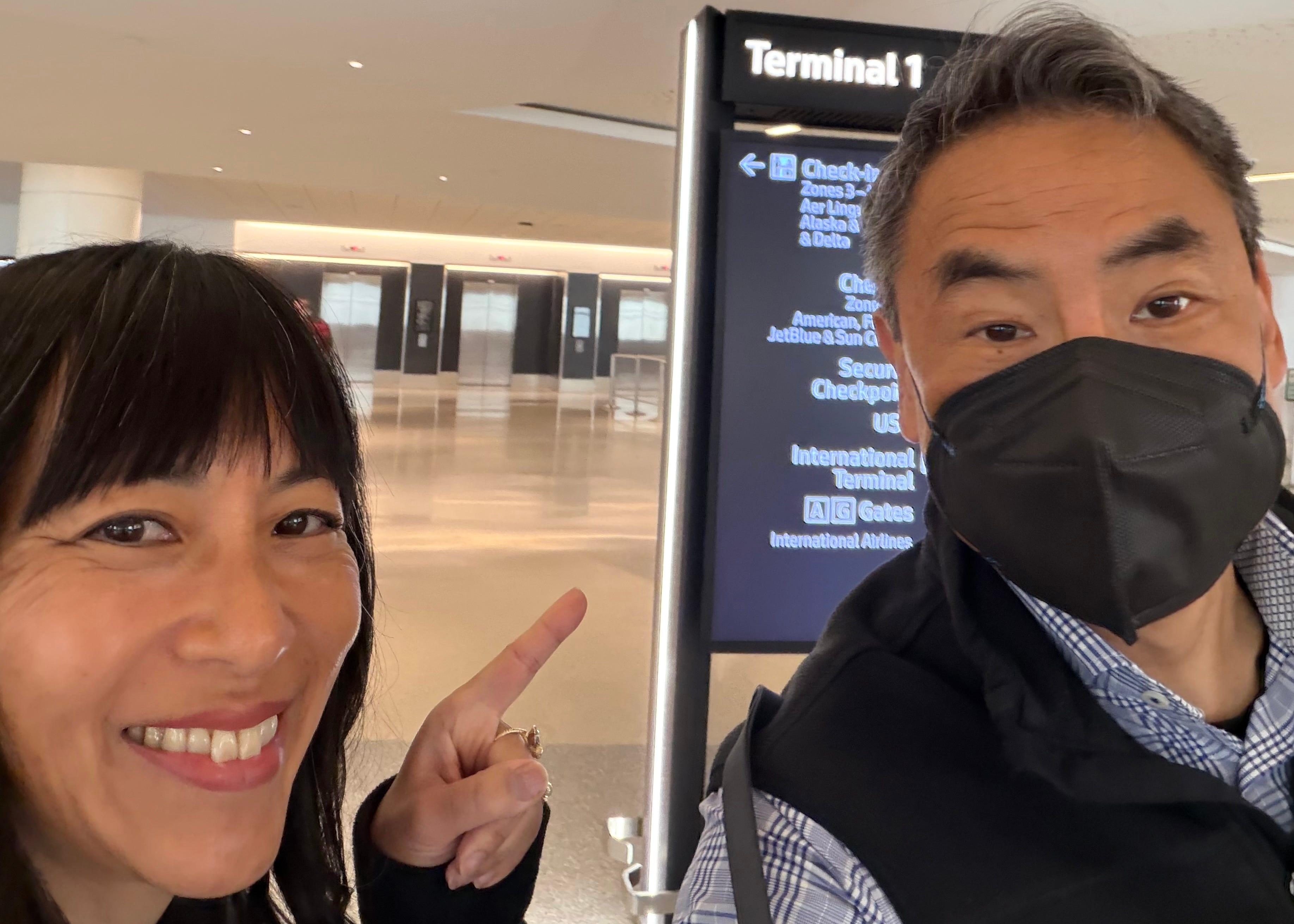
Not really a vacation
Marsha and I spent a week in the Bay Area and decided to take something we’d done in smaller ways and turn it up another notch or two. It didn’t feel quite like a normal vacation. It felt more intentional than that, and that distinction ended up mattering to us.
We had done lighter versions of this before. We still go down biannually for my cognitive testing at UCSF as part of an observational study I’ve been participating in for a few years now. When we’re in town we’ll see a few people along the way. Those trips always felt incidental, more like a bonus than a purpose. This was the first time we went with the primary goal of seeing people and built the entire week around that.
How things used to work
Before retirement, this almost never would have happened, not because we didn’t care, but because of how life filled in around us. Work, kids, activities, logistics all occupied the space where a phone call or a visit might have gone. Over time, relationships from earlier phases thinned out, people from previous jobs, friends who lived just one or two towns over, even neighbors or parents of our kids’ friends whom we genuinely liked. We would think about reaching out, but usually didn’t get around to it because life always got in the way.
The closest I came was a running group from my Latitude days that met every Sunday, which sounds like more than it was. We would run for an hour and then get back to everything else. It rarely expanded beyond that.
Driving around the Bay Area this past week, I was reminded how much simple friction plays a role in not engaging more regularly. Getting from one suburb to another can take real effort, and layering that onto already full lives makes it easy to see why we didn’t do more to stay connected when neck deep in full career and family mode.
What’s different now
Portland has been different for us. It’s more compact, easier to get around, and easier to see people who live nearby. Over time, especially in retirement, we’ve gotten used to meeting friends more often.
So this trip was intentional. We didn’t plan around places. We planned around people, which turned out to be a very different kind of trip.
What the week felt like
This trip didn’t come together on its own. Weeks before we left, we were tracking availability windows, routing each day around who could meet when, and figuring out how to move from one part of the Bay Area to another without losing half the day to traffic.
We saw more than twenty people over the course of the week. Some visits were just a couple of hours, and others stretched into half a day or more. We focused mostly on couples where both Marsha and I had relationships, which we realized isn’t that common. Just a few times we split up and saw people separately.
The conversations started with catching up and shared history, but they didn’t stay there. As we sat together, people moved quickly into where they actually are now, talking about kids getting married, relationships evolving, parents aging, and plans for what comes next.
One of the more unexpected moments came from a couple we hadn’t seen for a very long time. Years ago, Marsha and I had introduced two people, her former boss and someone I had worked with at a past company. That introduction turned into a marriage, a family, a home, and an ongoing successful business. The wife told us she owes her whole wonderful life to us! We never could have anticipated everything that followed when we made the introduction.
There were also things we learned that we simply didn’t know. One friend’s wife had been a kidney donor for her cousin, and in another conversation someone told us about an anonymous kidney donation in their family through the NHS in the UK. Given what we’re going through right now, those conversations landed when we needed them most.
There was also an offer that has stayed with me. Another couple, also empty nesters, said without hesitation that they would fly up to Portland to help take care of us if I end up needing close monitoring after a kidney transplant. They mentioned that they can both work from anywhere and could just come up to help. It was such a gift to receive.
What we noticed
By the end of the week, we were pretty drained socially. Spending that much concentrated time with people, even people we care about deeply, takes energy, and we felt it.
There were also moments that made the passage of time more visible. My aunt, my dad’s youngest sister, couldn’t really hear anymore. We had known this going in, because my cousin mentioned it on a family call a few weeks earlier. But knowing something and experiencing it in person are different things, and sitting across from her was its own kind of moment.
The conversations reminded us how much has changed since we all had young kids. Back then we talked about preschools, homework, and after-school schedules. Now we were talking about adult children trying to match their education to careers that would actually work for them.
We were intentional about how we chose to spend the time. We didn’t revisit old neighborhood haunts, and we didn’t try to see everyone. We spent 21 years in the Bay Area, so seeing everyone was never realistic anyway. We focused mostly on people where both of us had a relationship, and on people who had, at some point, said “next time you’re in town, let’s get together.” Those signals mattered.
One thing that stood out is that even among our friends who still live in the Bay Area, and even among those who know each other, they don’t necessarily see each other that often. In Portland, we probably see friends more regularly now than we ever did during our working years, in part because the city is more compact and easier to get around. But what struck us just as much is that when we reconnect with people from earlier phases of life, it still feels easy to pick right up.
What I keep coming back to is what makes those reconnections feel different. With people we’re in regular contact with, we already know what’s going on in their lives. With people we’re close to but see less often, we arrive without that background, and what they share has an impact in both familiar and wonderful ways.
That’s what happened here. Hearing that kids the same age as ours were struggling to find their footing professionally felt familiar and such a common theme for the times we live in. The kidney conversations landed the same way. These were not topics we would have encountered in daily life, yet they were so on point. There is something about that combination of closeness and distance that makes these relationships feel comfortable, raw, and well worth the effort.
Where this is going
One thing we genuinely appreciate is finding couples where both Marsha and I really value our own relationships with both people. Those visits had a different quality to them. The conversations went deeper and ranged more widely. When people had said “next time you’re in town, let’s get together,” they meant it. And when we showed up, so did they.
I came away feeling grateful and reminded of what these relationships actually represent in my life and why they’re worth making time for. We’ve started talking about doing something similar in Seattle. Those trips have always been about family, but there are friends there we’ve been meaning to see for a long time. I don’t think we stop with Seattle. Perhaps there are friends in other parts of the country we should make more of an effort to see as well. Retirement gives us more time, and investing in friendships is one of the ways we’re choosing to use it.
AI disclosure: I used AI tools during the drafting and editing process to help clarify structure and language. All ideas, judgments, and final wording are my own.
Well we really appreciated you reaching out, then coming up to visit! Life gets in the way of keeping connections... we all know and abhor this yet inevitably fall into the trap; kudos to you and Marsha to compensate for the rest of us.
Great listen, Steve! ❤️