


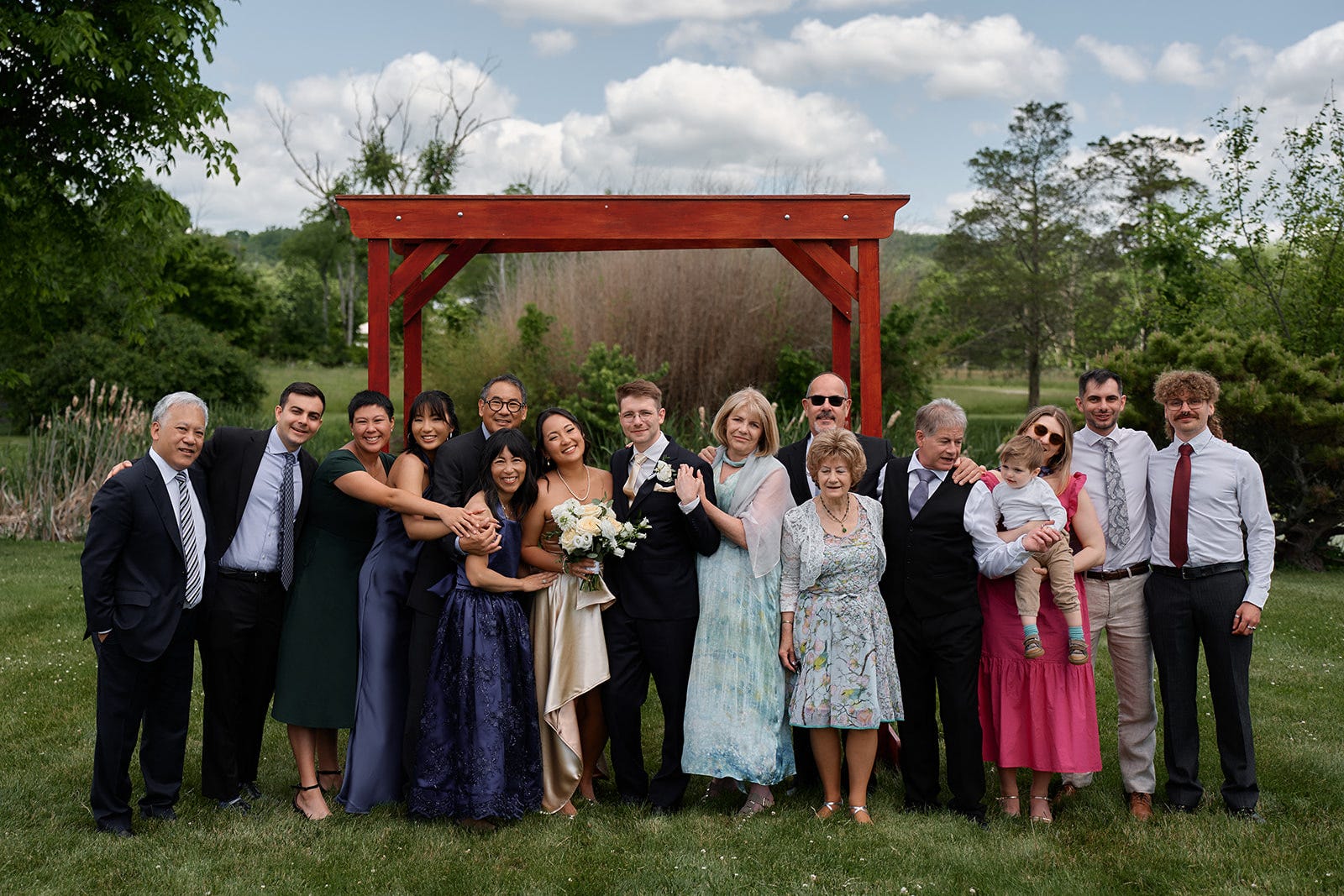
Marsha and I have always had a soft spot for non-traditional weddings. We had a small, intimate ceremony ourselves, and we don’t regret the choice. So when our daughter started planning her own wedding, we were perhaps more open than most parents to formats that did not follow the usual script. What actually took shape surprised even us.
It was more logistically complicated and more scattered across the globe than anyone anticipated. Having now lived through it, it was also considerably better than any single-venue wedding could have been.
How the Plan Kept Changing
The original idea was a wedding in the UK. Our daughter and her now-husband both spent time at Oxford, at different points. He is from the UK, and he studied at Oxford as an undergraduate. She was there for her master’s degree. It felt like a natural home for a celebration. The problem was that it would have meant a transatlantic trip not only for most of our family, spread across the West Coast, Houston, and Las Vegas, but also for many of their friends who were also based across the US. That felt like a lot to ask of everyone.
So the plan evolved into a smaller wedding in the UK, with engagement parties in the US for the friends and family who could not easily make the trip. That felt workable, until it didn’t. Getting legally married in the UK involves residency requirements and potential visa complications. So the next idea was a civil ceremony in the US, followed by a celebration in the UK, but that started to feel performative and that idea faded too.
And then, almost by accident, the answer presented itself. The groom’s family was already planning to travel to Princeton for his doctoral hooding ceremony, and there was already an engagement party planned for that same trip. The couple looked at the calendar and thought: why not just get married then too, with a small ceremony for close family the same week? And that was that. The wedding found its own shape.
The Implicit Division of Labor
What emerged from all this back-and-forth was something nobody quite planned but that turned out to be genuinely elegant. Each family celebrated with their own community, on their own turf.
In December, the focus was on the groom. The couple hosted a party in the UK for his mother’s side of the family and some of his childhood friends from the neighborhood. It started at an Indian restaurant and, as good parties do, continued on and migrated back to our in-laws’ home with all the relatives and childhood friends in tow. Marsha and I were not present for any of the international celebrations. It was a time strictly focused on the groom’s family and friends.
In March, the couple celebrated with family members based in the US. Our daughter organized a road trip across the US, with the couple spending a couple of days in each place. They started in Bellevue, Washington, where Marsha’s family is concentrated, with relatives from Washington and Oregon. Then they continued to Houston, where my mother and sister live, along with my cousins and our close family friends. The last stop of that trip was Las Vegas, where we had a nice combination of Marsha’s family and some of my family in attendance. It was symbolically a nice way of ending the week.
And similarly, the groom’s parents were not present at any of the March parties in the US. We all came together in Princeton in June for the wedding itself.
Nobody explicitly negotiated this division. It emerged from doing what was logistically easiest for everyone. But in retrospect it was one of the smartest things about the whole format. Each family celebrated on familiar ground, with their own people, without the complexity of the other family being present. There was no divided attention, just each community getting its own moment with the couple.
What the Format Made Possible
Our family and friends are spread across multiple continents and have their own dynamics. A single event in one place would have forced everyone into the same room at the same time, which would not have been the ideal fit for our particular situation. The distributed format let people participate in the way that suited them best, at gatherings built around their own communities. For many, it was not only a celebration of the couple but a reunion of sorts. Our daughter organized each event around the people who mattered to that group, and everyone got their own version of the celebration.
There is also something that happens when a couple sits down with a smaller group of people who all know each other. The conversations go deeper and the couple actually gets to spend time with the people they love, rather than moving through a receiving line. At every one of these gatherings, our daughter and her husband got to be present with the people in the room, which is harder to pull off when the room has two hundred people in it.
The Friday Wedding
The ceremony itself was small by design, with just close family and the wedding party. I will be honest. I had a complicated day, as I wrote about in my last post. Having the ceremony be intimate and low-key was, under the circumstances, exactly right.
But beyond my particular situation, everyone genuinely seemed to have a good time. It was a beautiful day, and the food was excellent. It was not the rubber chicken of a traditional wedding banquet but the menu of a real farm-to-table venue chosen for a small group of people who were actually going to taste it. There is something to be said for feeding a small group of people really well.
The Saturday Reception (and Laser Tag?!)
The big celebration was the following day after a morning of outdoor laser tag. Yes, that’s right. Outdoor laser tag was on the schedule. And shout out to the father who captured the flag and won with seconds left on the clock! This is what can be done when the couple intimately knows each of the guests. The crowd included the couple’s Princeton friends and advisors, a few Oxford friends, former Yale advisors, Yale friends, parents of friends who came from as far as South Carolina and Alabama, and the family and close friends who had been at the wedding the day before. All of it took place in the downstairs of a popular Princeton restaurant called The Meeting House, with a full bar and a spread of flatbreads, charcuterie, and fancy crudites.
However, again knowing the crowd was mostly people in their late twenties on graduate student budgets, the couple made sure there were constant opportunities for food. They served pizzas after laser tag, Mediterranean in between laser tag and evening celebration, and more food at the evening celebration itself.
As a parent, the evening event was the one I enjoyed most. I got to meet the Princeton advisors I had only heard about, reconnect with Yale advisors who made the trip down, and spend time with friends whose names I had known for years without ever having met them in person. I was not worrying about whether relatives were having a good time. I, too, was a guest in their world, and it was a genuinely wonderful feeling.
The after-party was at a divey bar called The Ivy, and we stayed until around 12:30am, still dressed up, until Marsha decided it had gotten too cold to continue. It was not exhaustion or the bar closing that ended the night, just the temperature. It felt like the right way to end the week.
The Honest Tradeoff
I have been mostly enthusiastic about this format, and I stand by that. But I want to be honest about what it cost.
Unfortunately, because the Friday wedding was very small and intimate, most of the people who celebrated with the couple were not there for the ceremony. They did not hear the vows. They did not see the toasts, which by all accounts were exceptional, delivered by the groom’s brother, the bride’s sister, and the bride’s best friend. They did not enjoy watching the couple’s friend officiate the ceremony or the bride’s Uncle’s speech during the ceremony. They did not see Marsha’s dress or her other wedding creations, which likely could have deserved their own post and probably their own gallery exhibit. The wedding photographer captured a beautiful record of the day, but it is a record most of the people who love this couple will never fully share.
Also, most of those who celebrated with the couple in the UK, Bellevue, Houston, and Las Vegas did not see the couple’s Princeton friend give his toast (and roast) Saturday night. He humorously had been lobbying to be best man for a full year to no avail. A week before the wedding, he caught the groom in a weak moment, and he secured the opportunity to give a speech at the Saturday reception. Both the writing and the delivery were epic.
The couple kept a book of Polaroids, snapshots from every gathering with little captions written by the guests. It is a lovely artifact and a genuine attempt to knit the whole distributed celebration into something unified, but it is not the same as being there.
There is also the matter of travel costs. Our daughter organized a lot of road trips and the couple spent more on travel than a single-venue wedding would have required. The tradeoff is that by avoiding one big wedding venue they were able to host everyone at real restaurants with real menus, without the wedding tax of a banquet hall. But the travel added up, in both cost and in bandwidth while they were finishing their doctoral dissertations.
What I keep coming back to, though, is a bar in Princeton at 12:30am with everyone still dressed up and Marsha finally declaring it too cold to stay, and the memory of so many people across so many gatherings who got their own real time with the couple, without having to compete with a hundred other people for their attention. It was truly a wedding about the couple, for the couple and spending time intimately with people that have meant so much to them.
Nobody planned it this way from the beginning. The format found itself, shaped by residency requirements and flight logistics and a doctoral hooding ceremony that happened to fall in the same week as an engagement party. But sometimes the accidental solution is the right one.
It was a good format. Even the parts that were complicated.
AI disclosure: I used AI tools during the drafting and editing process to help clarify structure and language. All ideas, judgments, and final wording are my own.