


It’s funny how headlines seep into everyday choices. Lately, I’ve been following the saga around Warner Bros. Discovery (WBD). I remember when AT&T bought Time Warner. From an industry perspective, this was a move that kicked off years of reshuffling, including the eventual spin-off of WarnerMedia and its merger with Discovery to form WBD in 2022. Back in 2018 right after the Time Warner acquisition was completed by AT&T, I was consulting for AlienVault which had also just been acquired by AT&T. At that time, I thought AT&T was spreading itself too thin. Personally, I was glad I wasn’t a DirecTV or Time Warner customer.
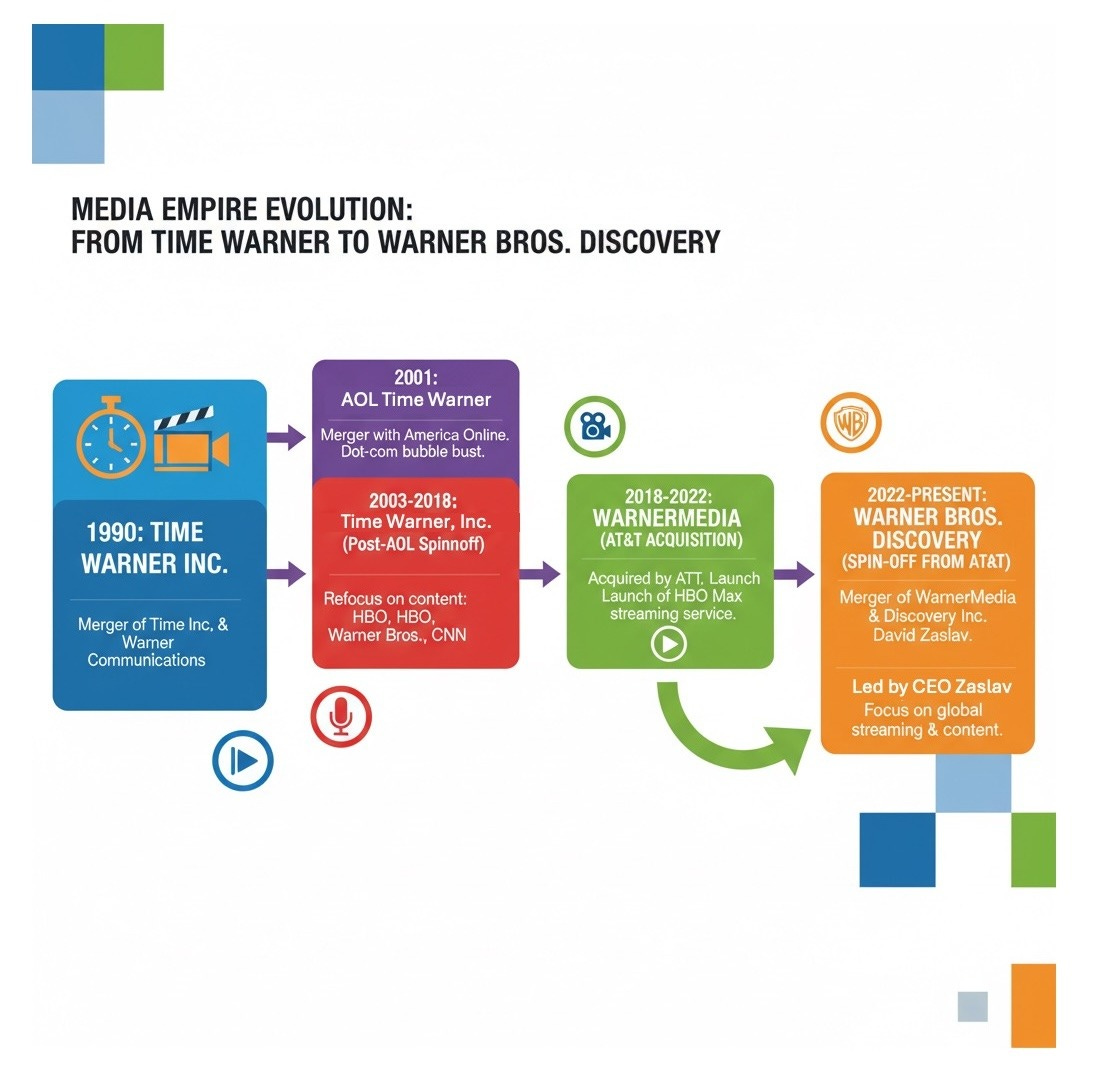
By 2018, we were already living in urban Portland. We had already “cut the cord” from any cable or satellite service in favor of digital broadcast TV and streaming services. At the time, we were only using Spotify, Amazon Prime, Netflix, and Hulu. Of course, we ultimately added Disney+ to our Hulu subscription, and we added Apple TV+ along the way, too. When South Park Season 27 launched, we added Paramount+. Other than a brief period when both Matrix 4 and Dune were on HBO Max, we largely avoided the WarnerMedia service while under AT&T and later as a part of WBD.
Fast forward to 2025, we as consumers are in another “Alien vs. Predator” moment as it comes to moves in the streaming business. For those unfamiliar with that movie’s tagline, it was “whoever wins, we lose.”
Whoever wins, we lose
Last week, Netflix announced a deal to acquire Warner Bros.’ film and TV studios and the HBO/HBO Max streaming business for an equity value of $72B (enterprise value $82.7B). Closing is expected in 12–18 months after WBD spins out its cable networks (CNN, TNT, Discovery, etc.) into “Discovery Global.” Netflix claims that it will keep Warner’s theatrical releases and HBO Max running for now. Of course, there will be some antitrust scrutiny here.
Unions are making strong arguments to regulators to block the Netflix–WBD deal. The Writers Guild of America West is claiming consolidation kills jobs, lowers wages, and raises prices. SAG‑AFTRA says the deal raises “serious questions” and must lead to more production, not less. As a viewer, I agree. I believe with a shrinking buyer competition for shows, there will be fewer places for creatives to pitch, there will be fewer bidders, and just less diversity and choice in what gets made. I hope this deal fails.
In response to the Netflix announcement, Paramount Skydance offered an all‑cash, $30/share hostile tender ($108.4B enterprise value) for all of WBD, including the TV networks. Paramount Skydance is arguing directly to shareholders that its bid offers faster regulatory certainty and better value. Still, the big fear behind Paramount’s bid is political. The Trump administration has signaled it wants CNN to lean more to the right, similar to how CBS News has been watered down under new leadership. Reports suggest Trump allies have pushed for “sweeping changes” at CNN if Paramount succeeds, including talent shake‑ups and editorial shifts. That’s not just a business story. It’s a press‑freedom story. If Paramount wins, we could see CNN and CBS News merged under a more conservative slant. To me, this move also creates less diversity and choice in what gets made. I hope this deal fails, too.
Whoever wins, we lose.
Hitting “pause” to save money
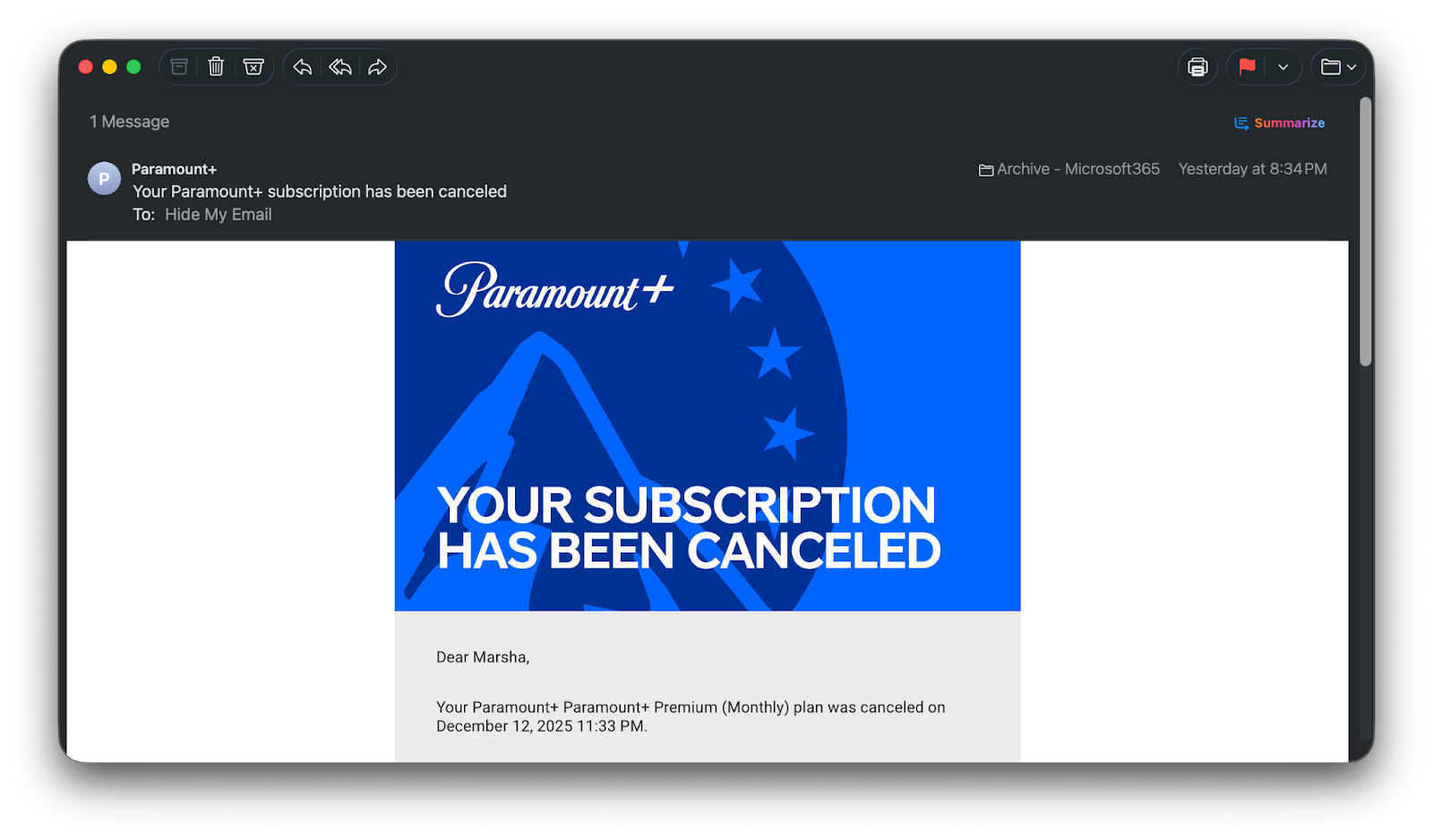
I’ve been a Netflix subscriber since 2015. Our addition of Paramount+ was more recent, when South Park Season 27 dropped. Still, subsequent changes around CBS News made Paramount+ easy to cancel.
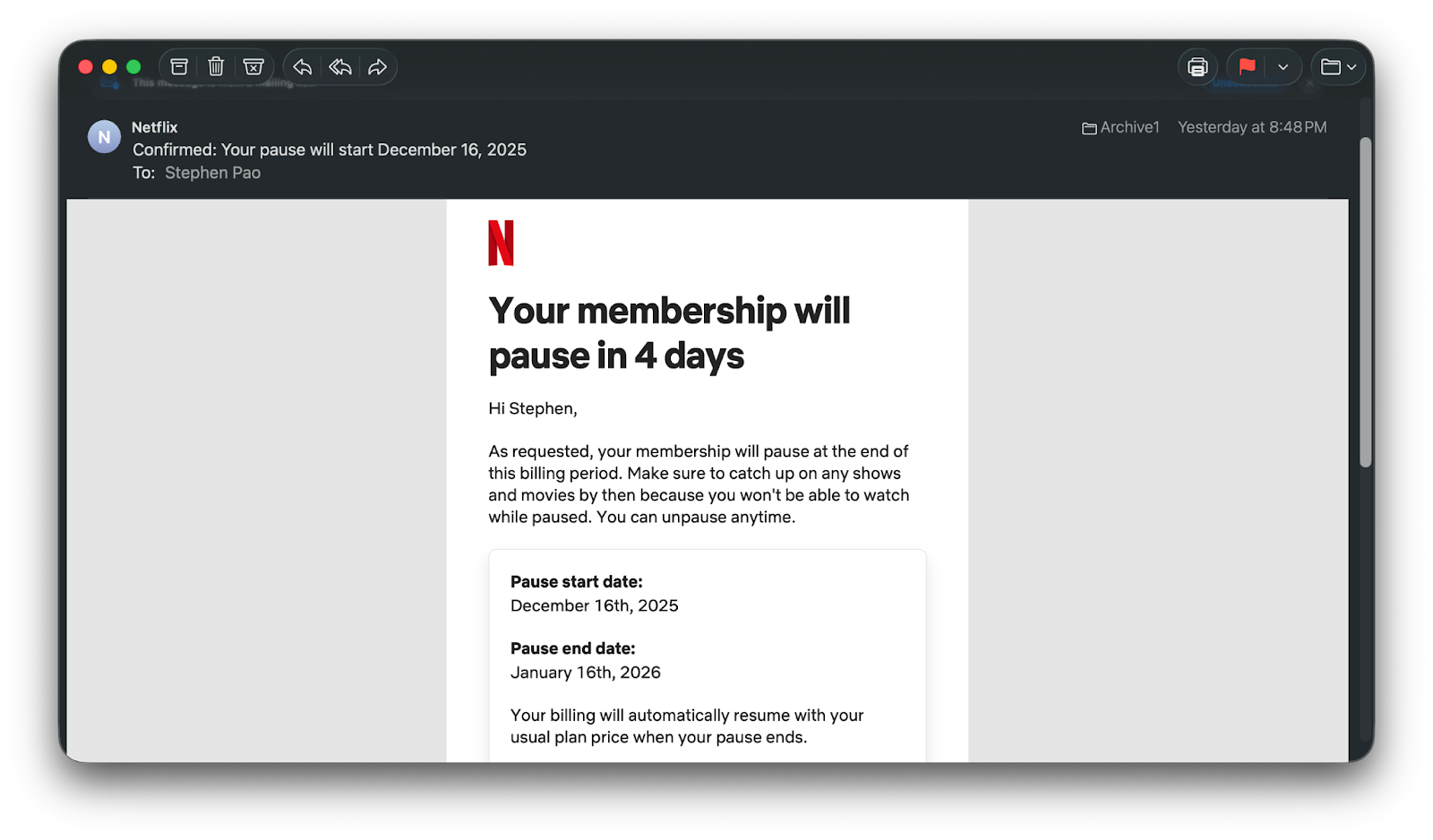
Then, given the Netflix–WBD news, I just put Netflix on the first month of “pause.” And while I was at it, I paused Hulu / Disney+ / ESPN, too.
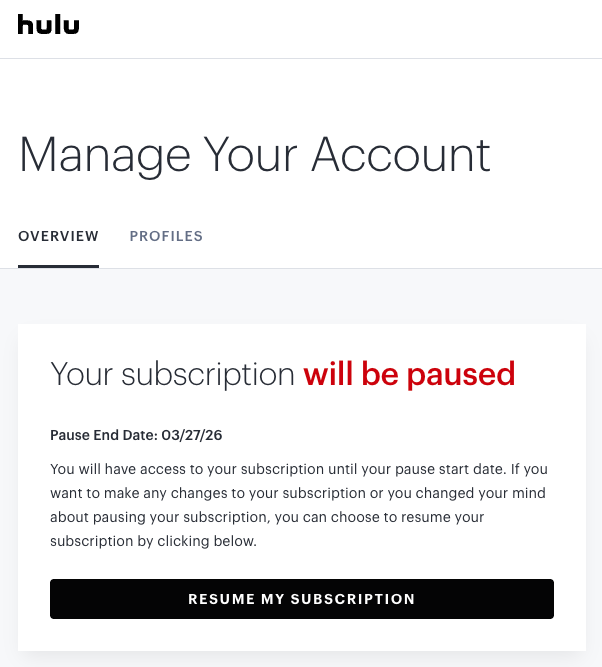
Part of this is symbolic. I am staging a little protest against consolidation. Part is practical. I’ve noticed I’m not even keeping up with the shows I already have on Amazon Prime Video and Apple TV+, which are services that ride along in bundles I value for other reasons.
Prime is a no‑brainer for shipping at $139/year. Apple One Premier is compelling because we already use iCloud 2TB, Fitness+, News+, and Apple Music. The Premier bundle runs $37.95/month, and I share it with Marsha, our two adult daughters, and my mom. Buying those pieces à la carte costs more anyway.
Meanwhile, streaming prices have climbed, especially the ad‑free tiers. Hulu and Netflix both raised prices in 2025. Apple TV+ raised its price, and this past year, Prime Video even made ads the default, with a $2.99/month upsell for ad‑free viewing. All of these moves acted as “nudges” to get me to reassess my stack.
Here’s what I cut:
Paramount+ Premium: $12.99/month. I dumbly had this charged on my Capital One Venture card for historical reasons, so I was only getting 2% cashback ($0.26) instead of 6% on streaming with Amex Blue Cash Preferred.
Netflix: $17.99/month (and my adult daughters in Chicago and New Jersey had already been locked out). With the Amex Blue Cash Preferred, I was getting $1.08 cashback, so it net out to $16.91.
Disney+/Hulu/ESPN bundle: $24.99/month, but I was getting a $10/month Amex credit back. With Amex Blue Cash Preferred, I was also getting $1.50 cashback, so it net out to $13.49 per month.
So pausing saves a little bit of money and feels like a small vote against consolidation.
Brain function as another win
Another reason for pausing these subscriptions is to get on a lower media diet. Marsha sent me a piece on podcasts and the brain’s “default mode network” (DMN). The thesis was that constant audio/video input crowds out mental “idle” time when creativity flourishes. Intracranial recordings show the DMN plays a causal role in divergent, creative thinking and that disrupting DMN activity reduces original thoughts. In short, more mind‑wandering time leads to more creative output.
For me, pausing subscriptions could produce a triple win to stand for a principle, save money, and boost creativity.
Not in love with the series format
A trend has emerged that I am not in love with. A lot of content is now being packaged as a series. Sometimes that’s great (Shrinking, Severance) when the story benefits from taking detours and adding color to the characters. Other times, I simply prefer a tight 2‑hour film. The Matrix (1999) remains my favorite content, with a clear beginning, middle, and end.
Unfortunately, the economics of streaming services seem to favor the series because they keep subscribers engaged across weeks. While Netflix claims that it will maintain Warner’s theatrical productions after the acquisition, industry observers, and Hollywood insiders like James Cameron, remain skeptical. Streamers like Netflix have made their profits by delivering series to our living rooms, rather than by releasing movies out to theaters.
Alternatives to paid streaming
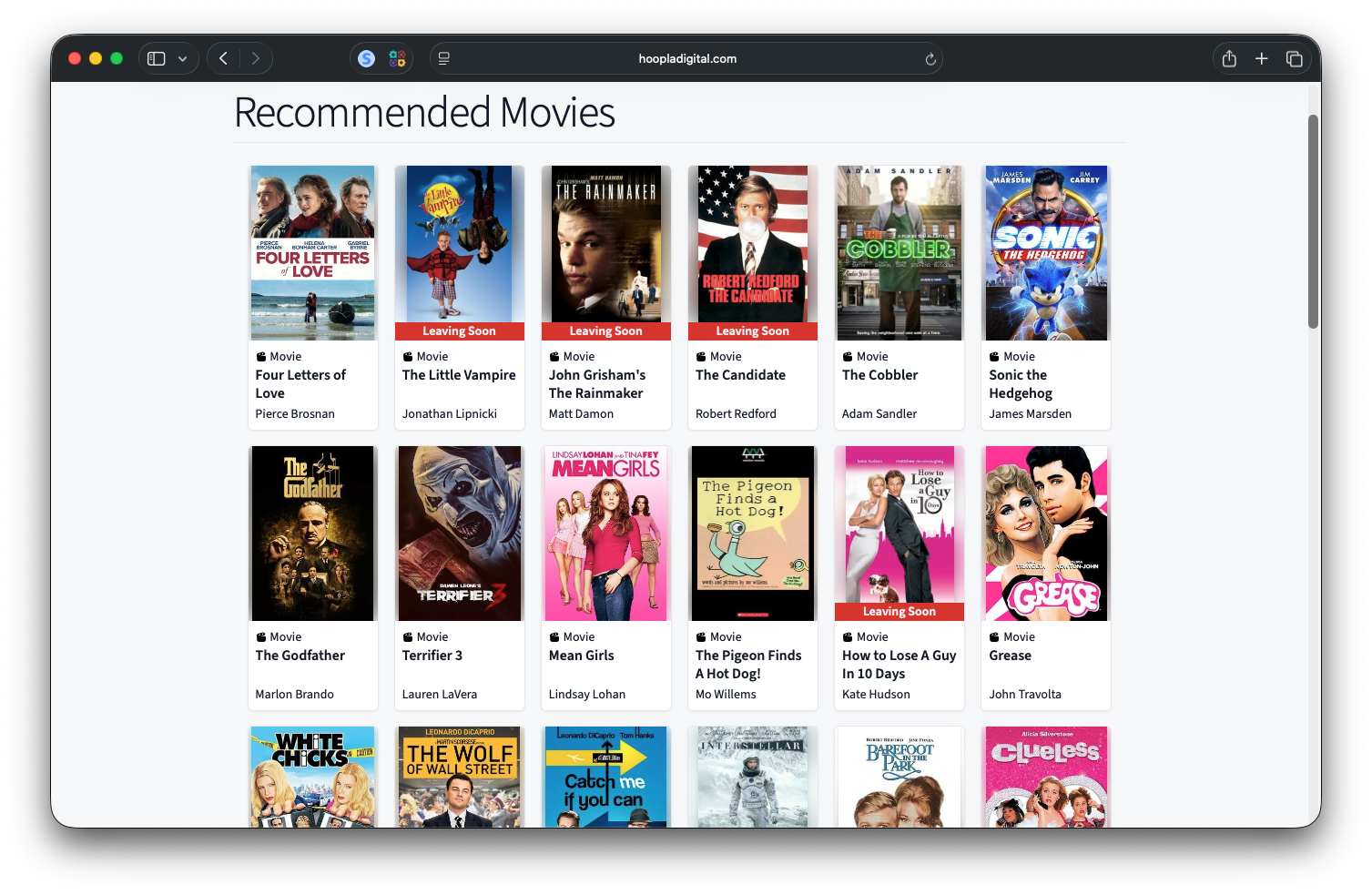
Some local friends here in Portland have avoided paying for streaming, advocating both Kanopy and Hoopla, which are free with many library cards including ours (Multnomah County). These services offer films, documentaries, and music, even if they don’t carry the big, popular titles I might want on a Friday night. Hoopla’s “Recommended” list cracked me up. Alongside some real classics, White Chicks shows up in the list.
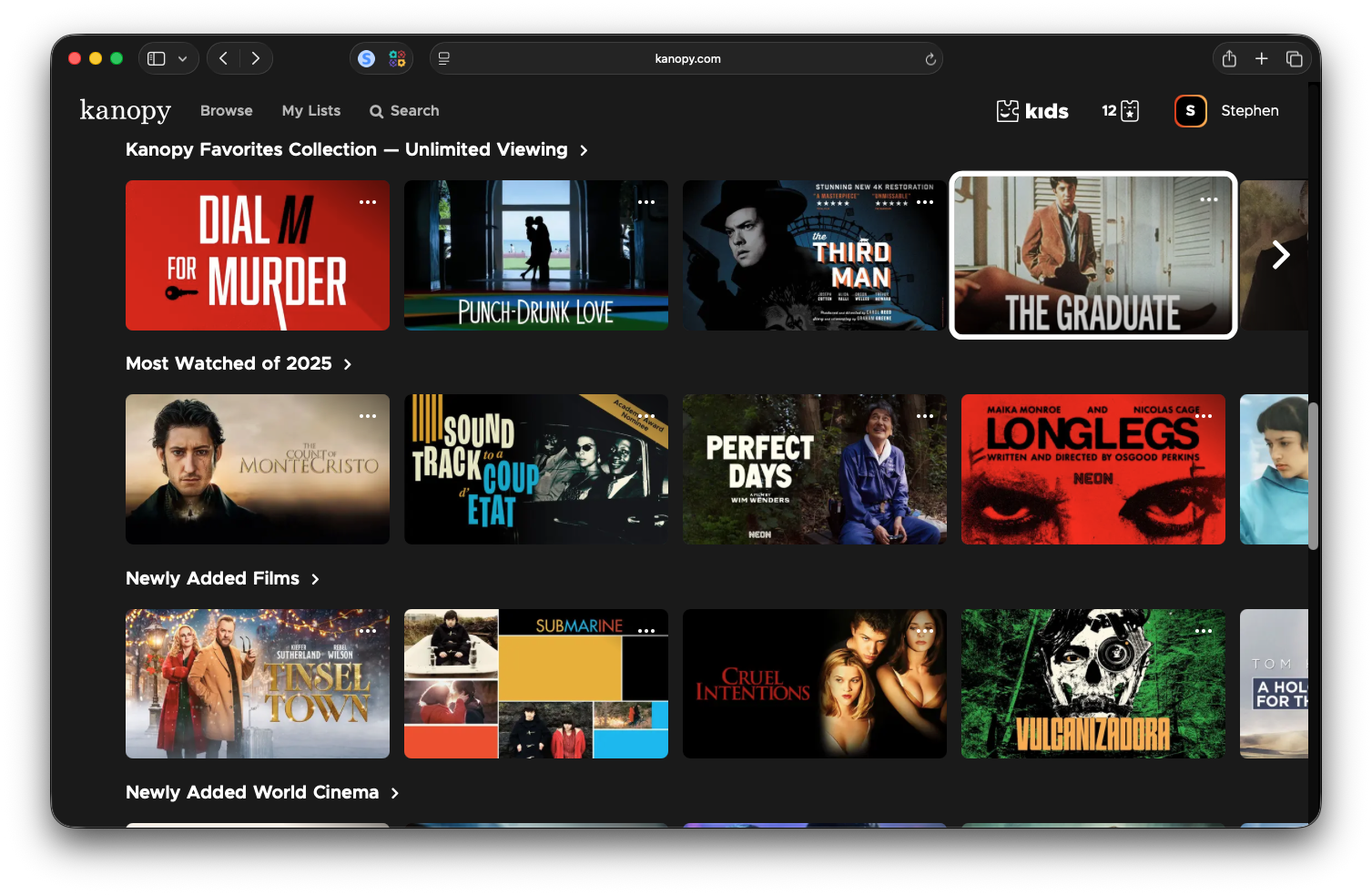
Kanopy leaned toward the more “oldie” titles. Top‑streamed films included Dial M for Murder and The Graduate.
Based on the recommendations from our friends, I did create accounts on these services, but I haven’t used them yet.
The problem of availability
There’s another thing that has gotten harder in the modern era of streaming. Because the different streaming services keep titles for only a limited time, the services also make watching together harder now, too. Recently, I tried hosting an online Teleparty for The Cutting Edge with college friends. Between the time we got all of our schedules aligned and the title hopping in and out of services, our plan to use Teleparty fell apart when Amazon Prime Video rotated the title out of their portfolio. Teleparty supports a bunch of platforms (Netflix, Disney+, Hulu, Max, Prime), but title availability is a game of musical chairs.
For the watch party with our friends, I had to go “old school” and share an old ripped copy from DVD, bypassing the streaming services altogether. Boo
Why Piracy Is Creeping Back
When legitimate streaming service offerings start to get too fragmented and the prices keep rising, the market incentivizes viewers toward illegal streaming and piracy sites. Reports show a resurgence of piracy tied to fragmentation and subscription fatigue. Music solved most of the piracy problems with Spotify and Apple Music, making legal access generally easier than piracy. Video has been moving away from the target here.
I am not intending to provide a justification for piracy at all. I am just recognizing that piracy is now fulfilling unmet audience demand where legal access, pricing, or timing have failed.
Pausing for now
So, here’s my plan. I’ll stick with Apple TV+ and Amazon Prime Video (bundled value), pause Netflix, Disney+, and keep Paramount+ cancelled. I’ll aim to watch less overall and give my brain the time and space to wander. If consolidation reduces choice, I’ll vote with my wallet, even symbolically, and re‑assess later when the dust settles.
And I’ll probably rewatch my old copy of The Matrix. After all, my favorite stories don’t need twelve episodes.
Regarding the Paramount Skydance acquisition of Warner Brothers and a likely faster path to regulatory approval, Jared Kushner's fund is also likely to be involved in the transaction. The White House continues to be for sale.
Agree with you on all these point, but if you have WBD, would you sell for the paramount takeover or hold out for the netflix merger? I inherited shares of WBD (which came from the AT&T spin out) and I'm conflicted about what to do...